
Understanding Vital Records is Vital!
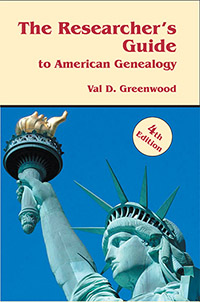
Chapter Thirteen of The Researcher’s Guide to American Genealogy (Fourth Edition) is all about vital records and their use for genealogy. Author Val Greenwood explains why most states outside of New England were so slow to require and standardize records of birth, marriage, death, and divorce. In fact, for a number of states vital recordkeeping did not commence until the 20th Century. The turning point appears to have been the persistence of doctors and statisticians in convincing public officials about the importance of understanding the cause of deaths in America in order to address underlying public health problems.
The bulk of the chapter, of course, discusses the application of vital records to genealogical research. Mr. Greenwood explains what one might expect to find in a birth, marriage, or death record, how to secure copies of records, the existing finding aids to each state’s records, whether a state’s records have been digitized or not (as of 2017), and limitations or problems in using vital records.
The following three facsimiles from Chapter Thirteen serve to illustrate the state-by-state coverage of vital records provided by the author. The pages below provide starting dates for official vital records, finding aids (if available), and the locations of the records in original or digital format.