‘Virginia’s Colonial Soldiers’—Tour de Force from Lloyd Bockstruck
The late Lloyd DeWitt Bockstruck was one of the leading genealogists of the second half of the 20th century. Mr. Bockstruck worked as the long-term manager of the genealogy department of the Dallas Public Library. A leading genealogy educator, he spoke widely at conferences throughout the United States. He served as registrar for multiple lineage organizations, including as state registrar for the Society of Colonial Wars. He spent years compiling comprehensive lists of 17th– and 18th-century soldiers and militia.
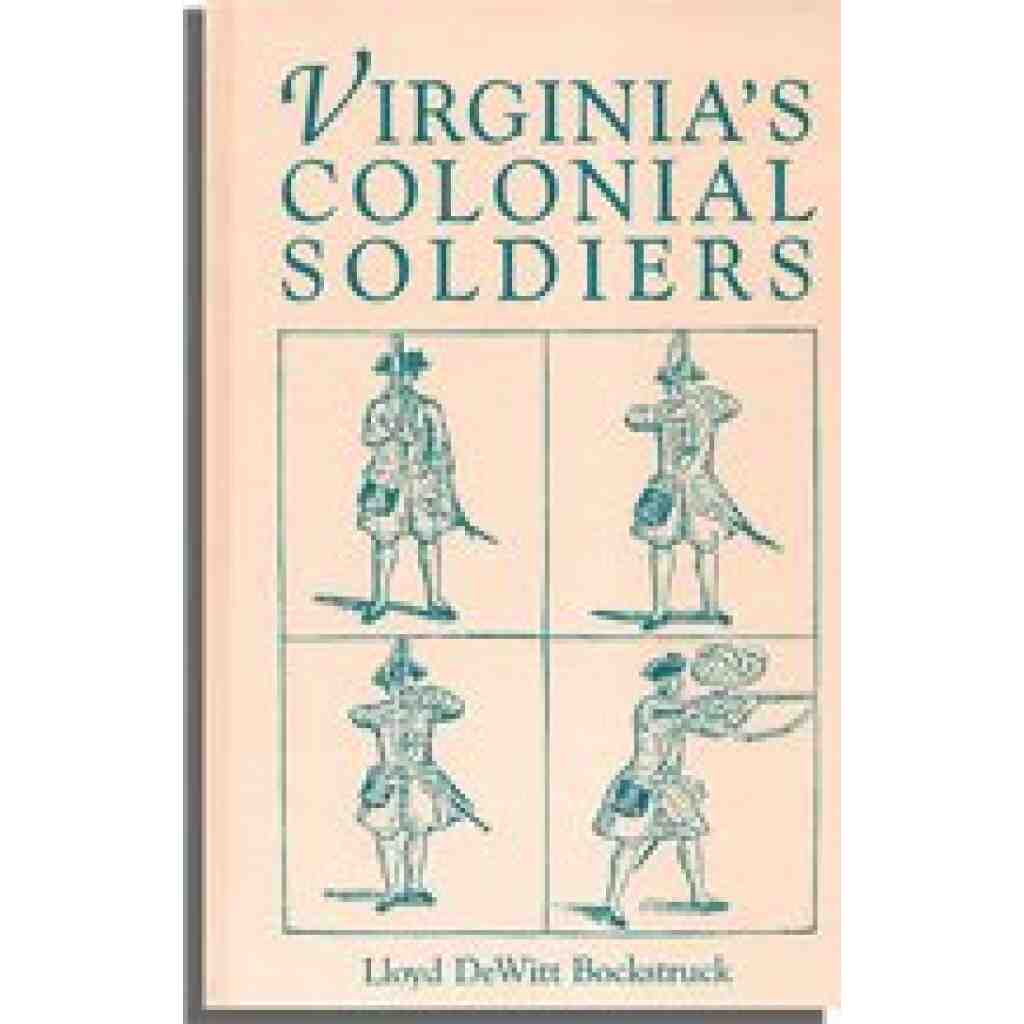
Lloyd Bockstruck’s first book in this regard was Virginia’s Colonial Soldiers. As he writes in the Preface, “The absence of a register of the colonial soldiers of Virginia has been very conspicuous to me in my capacity as a genealogical reference librarian. . . [Virginia] grew to be the most populous of the British colonies in the New World. Those Virginians, however, who served their monarch in the defense and expansion of the empire are difficult to document . . . “ Bockstruck goes on to say that, while various scholars have produced partial lists of colonial militia in books and periodicals, their contents had yet to be consolidated nor had “thousands of manuscript pages in depositories in this country and England containing the names of men in the service of the King.” Lloyd Bockstruck ultimately took on that task, and Genealogical.com published his results in 1988 as Virginia’s Colonial Soldiers.
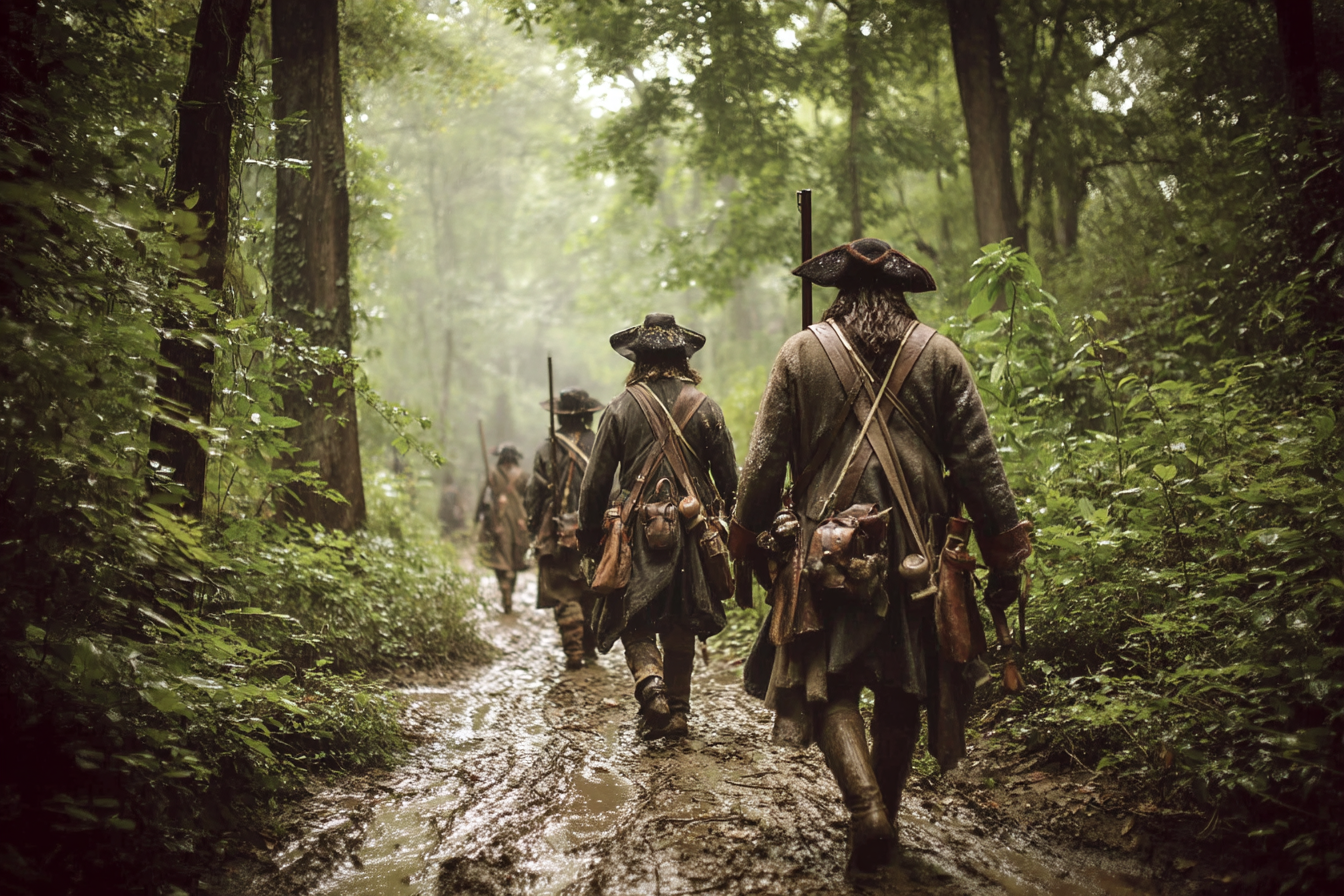
American military history begins with the establishment of the Virginia colonial militia in the seventeenth century. This ill trained militia was the colony’s only defense against Indian attacks and invasion by hostile powers. The records they left behind—fragmentary and widely scattered—are prized by genealogists because they can be used to establish a place of origin or to prove that a particular person lived in a specific locality at a specific time. The difficulty has always been locating the records and making them accessible.
With the publication of Virginia’s Colonial Soldiers, that problem is now behind us. From research based on county court minutes and orders, bounty land applications and warrants, records of courts martial, county militia rosters, Hening’s Statutes at Large, the Draper manuscripts, and manuscripts in the Public Record Office in London, we now have an authoritative register of Virginia’s colonial soldiers—a record so comprehensive that it may cause the genealogical history of Virginia to be re-written.
Nor is it merely a dry catalogue of names and dates. The military found it necessary, for instance, to resort to “size” rolls to prevent multiple enlistments by the same soldier and to apprehend those who deserted. The size rolls published here routinely give the soldier’s place of nativity, age, residence, occupation, and physical description. Sometimes the enlisting officer recorded his impressions of the soldier. John Williams was described as being fond of liquor, John Wade as having a villainous appearance, John Atwood as being thin-nosed, pock-pitted, and in-toed, John Bridgman as being spare-made with a wrinkled visage, and Thomas Deekins as being a likely handsome fellow. Nor was frontier warfare pleasant. John Potter was shot through his heel and had his jaw broken by a tomahawk in 1754, and William Shaw was taken prisoner in 1756 and had his toes cut off one by one. And so on and on, though of course not all the records are so interesting and informative.
Little is known about the ordinary people of colonial Virginia, but though they left no diaries or journals, we now have the rare privilege of coming almost face to face with them in Virginia’s Colonial Soldiers.