MY GPC LIBRARY, our eBook subscription program, consists of about 800 eBook titles and growing. Subscribers can look for names or places across all our eBooks–not just book by book—in a single search. The platform allows you to set bookmarks, make notes, and add citations as you work. Because you will have access to the entirety of[…]Read more

Author: Genealogical Publishing

Games (and Songs) Your Ancestors Played
William Wells Newell was the founder of the American Folklore Society. He is best remembered for his 1883 book, Games and Songs of American Children, which catalogues 160 games and rhymes enjoyed in the United States and abroad. Some of the games are familiar to us: “London Bridge is Falling Down,” Virginia Reel,” “London Bridge[…]Read more

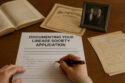
Documenting Your Lineage Society Application
Prospective lineage society members often question how to present their evidence of eligibility. While the actual criteria vary from one society to another, it’s always best to present the proof as clearly and as specifically as possible for the society registrar to assess. Dr. Kimberly Ormsby Nagy, author of The Complete Guide to Lineage Societies:[…]Read more

Using One’s Self as a Source – by Elizabeth Shown Mills, CG, CG, FASG
Since 2007, Evidence Explained: Citing History Sources from Artifacts to Cyberspace has been the “Bible” for history researchers—offering not only citation models but also guidance in the analysis and use of sources. In this current blog series we are offering excerpts from Chapters 1 and 2 of EE’s fourth edition: Fundamentals of Research & Analysis,[…]Read more

Reviewer Compares ‘Evidence Explained’ Third and Forth Editions
Stuart Blandon Traiman, M.D., manages the genealogy blog, Six Generations. In March 2024, he posted a detailed review of the Fourth Edition of Elizabeth Shown Mills’ EVIDENCE EXPLAINED: CITING HISTORY SOURCES FROM ARTIFACTS TO CYBERSPACE. It’s here that Dr. Traiman commented: “Inside the book, there is an entirely new Chapter 3. This chapter simplifies the[…]Read more

Your Stripped Bare Guide to Citing & Using History Sources, by Elizabeth Shown Mills
Sources provide information, from which we identify evidence for analysis. A conclusion drawn from sound analysis may then stand as proof. In these two sentences, Elizabeth Shown Mills defines the proper use of sources to come to valid conclusions in historical research. Your Stripped Bare Guide, Mrs. Mills’ latest work on citing and using historical[…]Read more

Genealogy in Reverse Exposes New Vein of Research Gold
As the title Genealogy in Reverse. Finding the Living: A Practical Guide for All Genealogists implies, Cheri Hudson Passey’s overriding purpose in writing her new book is to help genealogists find their ancestors. What’s different about her approach is the emphasis she places on finding and contacting living relatives to fill in the gaps. A[…]Read more

‘History for Genealogists’ Features Collection of State Timelines
Judy Jacobson’s masterwork, History for Genealogists: Using Chronological TimeLines to Find and Understand Your Ancestors is crammed with potential clues for family historians. In fact, the book’s subtitle says it all: (1) Historical events can tip off researchers as to the whereabouts and reason why a forebear shows up somewhere, and (2) The same information[…]Read more

Genealogy in Reverse Abounds with Sources of Living Relatives
As we mentioned in the June 25 issue of “Genealogy Pointers,” Cheri Hudson Passey’s new book, Genealogy in Reverse: Finding the Living. A Practical Guide for Genealogists, offers new hope to family historians who have lost their way. It does so by showing them how to contact a lost or unknown cousin, etc. who may[…]Read more

Three Stumbling Blocks in Every Research Project: Objectivity, Presentism & Truth – By Elizabeth Shown Mills, CG, CGL, FASG
Since 2007, Evidence Explained: Citing History Sources from Artifacts to Cyberspace has been the “Bible” for history researchers—offering not only citation models but also guidance in the analysis and use of sources. In this current blog series we are offering excerpts from Chapters 1 and 2 of EE’s fourth edition: Fundamentals of Research & Analysis,[…]Read more